
 Artem Halushko
f8af340464 |
7 years ago | |
|---|---|---|
| .. | ||
| test | 7 years ago | |
| .jshintrc | 7 years ago | |
| LICENSE | 7 years ago | |
| bower.json | 7 years ago | |
| changelog.md | 7 years ago | |
| component.json | 7 years ago | |
| package.json | 7 years ago | |
| readme.md | 7 years ago | |
| resolve-url.js | 7 years ago | |
readme.md
Overview
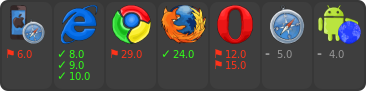
Like Node.js’ path.resolve/url.resolve for the browser.
var resolveUrl = require("resolve-url")

window.location
// https://example.com/articles/resolving-urls/edit

resolveUrl("remove")
// https://example.com/articles/resolving-urls/remove

resolveUrl("/static/scripts/app.js")
// https://example.com/static/scripts/app.js

// Imagine /static/scripts/app.js contains `//# sourceMappingURL=../source-maps/app.js.map`
resolveUrl("/static/scripts/app.js", "../source-maps/app.js.map")
// https://example.com/static/source-maps/app.js.map

resolveUrl("/static/scripts/app.js", "../source-maps/app.js.map", "../coffee/app.coffee")
// https://example.com/static/coffee/app.coffee

resolveUrl("//cdn.example.com/jquery.js")
// https://cdn.example.com/jquery.js

resolveUrl("http://foo.org/")
// http://foo.org/
Installation
npm install resolve-urlbower install resolve-urlcomponent install lydell/resolve-url
Works with CommonJS, AMD and browser globals, through UMD.
Usage
resolveUrl(...urls)
Pass one or more urls. Resolves the last one to an absolute url, using the
previous ones and window.location.
It’s like starting out on window.location, and then clicking links with the
urls as href attributes in order, from left to right.
Unlike Node.js’ path.resolve, this function always goes through all of the
arguments, from left to right. path.resolve goes from right to left and only
in the worst case goes through them all. Should that matter.
Actually, the function is really like clicking a lot of links in series: An
actual <a> gets its href attribute set for each url! This means that the
url resolution of the browser is used, which makes this module really
light-weight.
Also note that this functions deals with urls, not paths, so in that respect it
has more in common with Node.js’ url.resolve. But the arguments are more
like path.resolve.
Tests
Run npm test, which lints the code and then gives you a link to open in a
browser of choice (using testling).